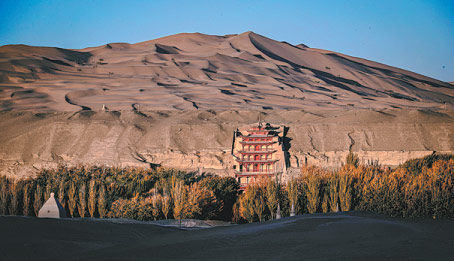
Mogao Grottoes
Introduction
The Mogao Grottoes, also known as the Mogao Caves or Caves of the Thousand Buddhas, are a collection of 735 caves located in Dunhuang, Gansu province, China. These caves are a significant cultural and historical treasure, recognized for housing one of the largest collections of Buddhist art in the world. In 1987, the Mogao Grottoes were designated as a UNESCO World Heritage Site, underscoring their global cultural significance.
Historical Background
Construction of the Mogao Grottoes began in 366 AD during the period of the Sixteen Kingdoms. Over the course of more than a millennium, the caves were expanded and embellished under various dynasties, including the Sui and Tang. The site served as a sanctuary for Buddhist monks, a place of worship, and a vital stop for travelers along the Silk Road, a major trade route connecting China to the Western world.
Artistic Significance
The caves feature more than 2,000 colored sculptures and 45,000 square meters of murals. These artworks were created by ancient worshippers and depict a variety of subjects, including Buddhist narratives, religious figures like the Buddha, bodhisattvas, and apsaras, and even elements of daily life. The murals and sculptures reflect a fusion of artistic styles, indicative of the cultural exchanges facilitated by the Silk Road.
Cultural and Religious Context
Dunhuang, where the Mogao Grottoes are located, was historically a bustling city on the Silk Road that linked China with Central Asia, the Middle East, and Europe. This strategic location enabled a rich cultural and religious exchange, influencing the art and architecture of the grottoes. The site is particularly noted for its Buddhist influence, with the artwork serving as a testament to the spread and evolution of Buddhism in China and beyond.
Preservation and Conservation Efforts
Preserving the Mogao Grottoes has been a significant challenge due to environmental factors and human impact. Excessive tourism poses a threat to the fragile murals and sculptures, prompting the implementation of visitor caps and ticket reservation systems to control the number of visitors. Scientific methods have been employed to monitor and maintain the site's environmental conditions, including a meteorological station established in 1989 and a comprehensive monitoring system since 2011. These measures aim to prevent further degradation and ensure the longevity of this invaluable heritage.
Digital Documentation and Modern Initiatives
To combat the inevitable deterioration, modern technology plays a pivotal role in preserving the Mogao Grottoes. The Digital Dunhuang Project, initiated in the 1980s, aims to create a digital archive of the grottoes' artworks. This project involves capturing high-resolution images of the murals and sculptures, allowing for virtual tours and remote access to the site's cultural treasures. Digitalization not only aids in the preservation of the grottoes but also makes this cultural heritage accessible to a global audience, thereby promoting awareness and appreciation of Dunhuang's historical significance.
Cultural Impact and Legacy
The Mogao Grottoes continue to inspire artists, historians, and researchers worldwide. The site's rich cultural heritage has fostered various artistic endeavors, including the creation of Dunhuang Dance, a genre that brings the murals to life through performance. Exhibitions and educational programs further disseminate the knowledge and artistic achievements of the Mogao Grottoes, ensuring that their legacy persists. The grottoes' status as a cultural symbol of the Silk Road underscores the importance of cultural exchange and the shared history of human civilization.
The Mogao Grottoes are a quintessential example of the rich tapestry of cultural interactions along the Silk Road. They not only offer insight into the religious and artistic practices of ancient China but also serve as a reminder of the country's historical openness to cultural exchange. The ongoing efforts to preserve and promote this cultural heritage site ensure that the Mogao Grottoes continue to be a source of inspiration and knowledge for future generations.








